

Nepalese Lokta Paper
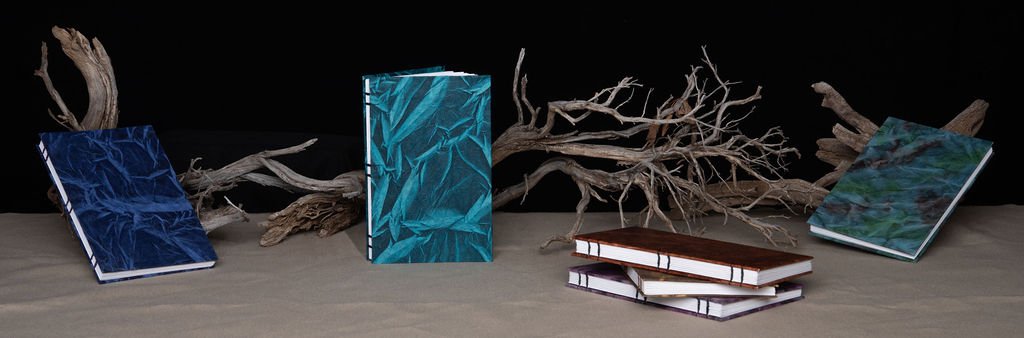

The Journal Cover
is created with Nepalese Lokta Paper, which comes from the Lokta, or Daphne, bush in Nepal. The bush grows throughout the Himalayas, and when properly cropped, can regenerate in 3-7 years. Tibetan monks first used Lokta paper 1000 years ago to transcribe their sacred texts, and some of those original documents are still in existence today. Lokta paper is strong, durable, and impervious to insects.
Shop Journals
6 × 9”
4 × 7”
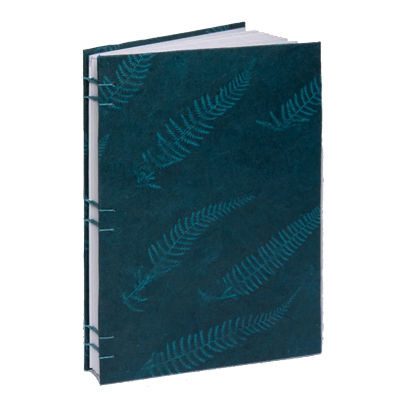
The journal cover is created with Nepalese Lokta paper, which comes from the Lokta, or Daphne, bush that grows throughout the majestic Himalayas. When properly cropped, the bush can regenerate in 3-7 years. Tibetan monks first used Lokta paper 1000 years ago to transcribe their sacred texts, and some of those original documents are still in existence today. Lokta paper is strong, durable, and impervious to insects.
This design is created by placing leaves on wet pulp and letting the mixture dry in the sun. The resulting 2-toned paper exhibits a silhouette of each leaf.
Crush paper pages are slightly textured and off-white, and are made with by-products that would normally head for the landfill, i.e. citrus fruits, corn, olives, coffee, etc. along with 30% post-consumer recycled waste. The paper is made using 100% green energy, and the company claims to reduce the carbon footprint by 20%.
I hand-bind the journals with the Coptic stitch.
6 × 9”
4 × 7”
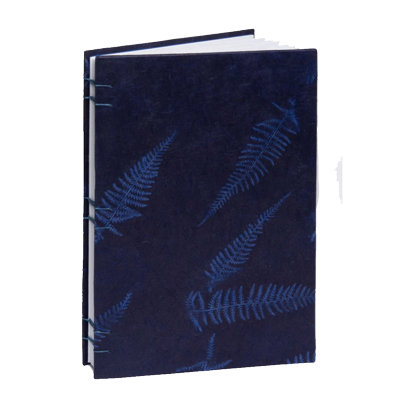
The journal cover is created with Nepalese Lokta paper, which comes from the Lokta, or Daphne, bush that grows throughout the majestic Himalayas. When properly cropped, the bush can regenerate in 3-7 years. Tibetan monks first used Lokta paper 1000 years ago to transcribe their sacred texts, and some of those original documents are still in existence today. Lokta paper is strong, durable, and impervious to insects.
This design is created by placing leaves on wet pulp and letting the mixture dry in the sun. The resulting 2-toned paper exhibits a silhouette of each leaf.
Crush paper pages are slightly textured and off-white, and are made with by-products that would normally head for the landfill, i.e. citrus fruits, corn, olives, coffee, etc. along with 30% post-consumer recycled waste. The paper is made using 100% green energy, and the company claims to reduce the carbon footprint by 20%.
I hand-bind the journals with the Coptic stitch.
6 × 9”
4 × 7”
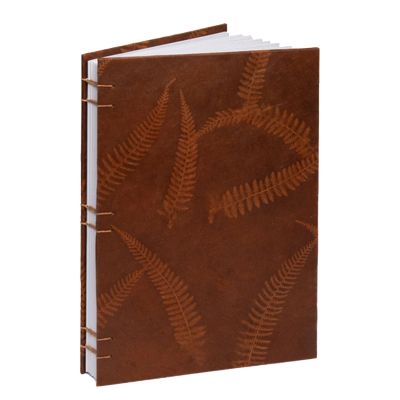
The journal cover is created with Nepalese Lokta paper, which comes from the Lokta, or Daphne, bush that grows throughout the majestic Himalayas. When properly cropped, the bush can regenerate in 3-7 years. Tibetan monks first used Lokta paper 1000 years ago to transcribe their sacred texts, and some of those original documents are still in existence today. Lokta paper is strong, durable, and impervious to insects.
This design is created by placing leaves on wet pulp and letting the mixture dry in the sun. The resulting 2-toned paper exhibits a silhouette of each leaf.
Crush paper pages are slightly textured and off-white, and are made with by-products that would normally head for the landfill, i.e. citrus fruits, corn, olives, coffee, etc. along with 30% post-consumer recycled waste. The paper is made using 100% green energy, and the company claims to reduce the carbon footprint by 20%.
I hand-bind the journals with the Coptic stitch.
6 × 9”
4 × 7”
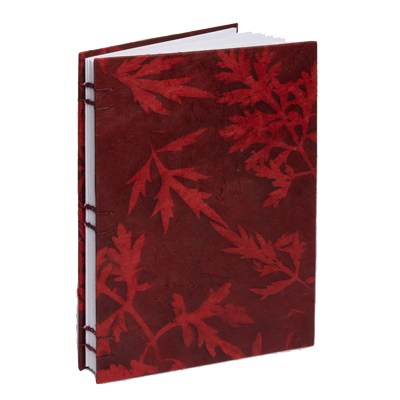
The journal cover is created with Nepalese Lokta paper, which comes from the Lokta, or Daphne, bush that grows throughout the majestic Himalayas. When properly cropped, the bush can regenerate in 3-7 years. Tibetan monks first used Lokta paper 1000 years ago to transcribe their sacred texts, and some of those original documents are still in existence today. Lokta paper is strong, durable, and impervious to insects.
This design is created by placing leaves on wet pulp and letting the mixture dry in the sun. The resulting 2-toned paper exhibits a silhouette of each leaf.
Crush paper pages are slightly textured and off-white, and are made with by-products that would normally head for the landfill, i.e. citrus fruits, corn, olives, coffee, etc. along with 30% post-consumer recycled waste. The paper is made using 100% green energy, and the company claims to reduce the carbon footprint by 20%.
I hand-bind the journals with the Coptic stitch.

6 × 9”
4 × 7”
The journal cover is created with Nepalese Lokta paper, which comes from the Lokta, or Daphne, bush that grows throughout the majestic Himalayas. When properly cropped, the bush can regenerate in 3-7 years. Tibetan monks first used Lokta paper 1000 years ago to transcribe their sacred texts, and some of those original documents are still in existence today. Lokta paper is strong, durable, and impervious to insects.
This soft and supple paper is hand crinkled and then exposed to the sun, which washes out the color around the wrinkles to create a beautiful dimensional design.
Crush paper pages are slightly textured and off-white, and are made with by-products that would normally head for the landfill, i..e citrus fruits, corn, olives, coffee, etc. along with 30% post-consumer recycled waste. The paper is made using 100% green energy, and the company claims to reduce the carbon footprint by 20%.
I hand-bind the journals with the Coptic stitch.

6 × 9”
4 × 7”
The journal cover is created with Nepalese Lokta paper, which comes from the Lokta, or Daphne, bush that grows throughout the majestic Himalayas. When properly cropped, the bush can regenerate in 3-7 years. Tibetan monks first used Lokta paper 1000 years ago to transcribe their sacred texts, and some of those original documents are still in existence today. Lokta paper is strong, durable, and impervious to insects.
This soft and supple paper is hand crinkled and then exposed to the sun, which washes out the color around the wrinkles to create a beautiful blue-green dimensional design.
Crush paper pages are slightly textured and off-white, and are made with by-products that would normally head for the landfill, i..e citrus fruits, corn, olives, coffee, etc. along with 30% post-consumer recycled waste. The paper is made using 100% green energy, and the company claims to reduce the carbon footprint by 20%.
I hand-bind the journals with the Coptic stitch.

6 × 9”
4 × 7”
The journal cover is created with Nepalese Lokta paper, which comes from the Lokta, or Daphne, bush that grows throughout the majestic Himalayas. When properly cropped, the bush can regenerate in 3-7 years. Tibetan monks first used Lokta paper 1000 years ago to transcribe their sacred texts, and some of those original documents are still in existence today. Lokta paper is strong, durable, and impervious to insects.
This 2-layered handmade paper has been varnished with a semi-gloss and crackled for a rich and rustic look in Nepal.
Crush paper pages are slightly textured and off-white, and are made with by-products that would normally head for the landfill, i..e citrus fruits, corn, olives, coffee, etc. along with 30% post-consumer recycled waste. The paper is made using 100% green energy, and the company claims to reduce the carbon footprint by 20%.
I hand-bind the journals with the Coptic stitch.

6 × 9”
4 × 7”
The journal cover is created with Nepalese Lokta paper, which comes from the Lokta, or Daphne, bush that grows throughout the majestic Himalayas. When properly cropped, the bush can regenerate in 3-7 years. Tibetan monks first used Lokta paper 1000 years ago to transcribe their sacred texts, and some of those original documents are still in existence today. Lokta paper is strong, durable, and impervious to insects.
This soft and supple paper is hand crinkled and hand-dyed to create a dimensional mountain terrain pattern.
Crush paper pages are slightly textured and off-white, and are made with by-products that would normally head for the landfill, i..e citrus fruits, corn, olives, coffee, etc. along with 30% post-consumer recycled waste. The paper is made using 100% green energy, and the company claims to reduce the carbon footprint by 20%.
I hand-bind the journals with the Coptic stitch.

6 × 9”
4 × 7”
The journal cover is created with Nepalese Lokta paper, which comes from the Lokta, or Daphne, bush that grows throughout the majestic Himalayas. When properly cropped, the bush can regenerate in 3-7 years. Tibetan monks first used Lokta paper 1000 years ago to transcribe their sacred texts, and some of those original documents are still in existence today. Lokta paper is strong, durable, and impervious to insects.
This soft and supple paper is hand-crinkled and hand-dyed to create a dimensional mountain terrain pattern.
Crush paper pages are slightly textured and off-white, and are made with by-products that would normally head for the landfill, i.e. citrus fruits, corn, olives, coffee, etc. along with 30% post-consumer recycled waste. The paper is made using 100% green energy, and the company claims to reduce the carbon footprint by 20%.
I hand-bind the journals with the Coptic stitch.
6 × 9”
4 × 7”
The journal cover is created with Nepalese Lokta paper, which comes from the Lokta, or Daphne, bush that grows throughout the majestic Himalayas. When properly cropped, the bush can regenerate in 3-7 years. Tibetan monks first used Lokta paper 1000 years ago to transcribe their sacred texts, and some of those original documents are still in existence today. Lokta paper is strong and durable.
These eco-friendly papers are hand-marbled in rich vibrant colors of red and black, with gold accents, to create a beautifully unique design. Hand-marbling is the process of taking a sheet of paper and dipping it into a tray of water that holds various colors of dyes or paints. These dyes or paints float on top of the water and are swirled with a stick to create unique patterns on each sheet of paper.
Crush paper pages are slightly textured and off-white, and are made with by-products that would normally head for the landfill, i..e citrus fruits, corn, olives, coffee, etc. along with 30% post-consumer recycled waste. The paper is made using 100% green energy, and the company claims to reduce its carbon footprint by 20%.
Wholesale & Workshop Inquiries
For more information about a wholesale order or if you would like to collaborate to create a custom workshop designed to meet the specific needs of your group, fill out the form below or contact Mary Ann at 720-485-1431.
6 × 9”
4 × 7”
The journal cover is created with Nepalese Lokta paper, which comes from the Lokta, or Daphne, bush that grows throughout the majestic Himalayas. When properly cropped, the bush can regenerate in 3-7 years. Tibetan monks first used Lokta paper 1000 years ago to transcribe their sacred texts, and some of those original documents are still in existence today. Lokta paper is strong, durable, and impervious to insects.
Crush paper pages are slightly textured and off-white, and are made with by-products that would normally head for the landfill, i.e. citrus fruits, corn, olives, coffee, etc. along with 30% post-consumer recycled waste. The paper is made using 100% green energy, and the company claims to reduce the carbon footprint by 20%.
I hand-bind the journals with the Coptic stitch.